
DuraGates — Cantilever Gates, Evolved
Top Guide Selection
Guide assembly choice depends on both functional and aesthetic considerations: how the gate is built, whether the guide system needs to be hidden from view, and price. Here’s how to choose between over-the-top guides, side rollers, and monorail U-channel guides.
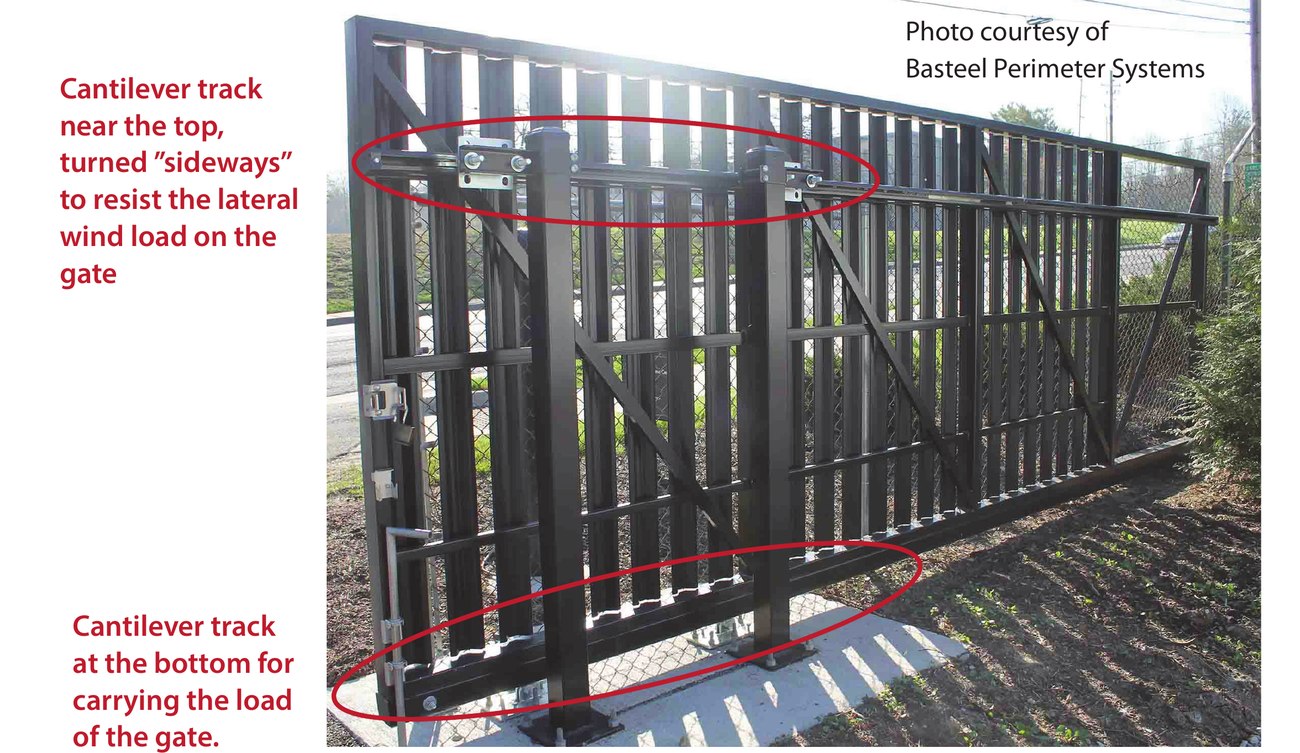
Guide assembly choice depends on both functional and aesthetic considerations.
Aesthetics
- Can the guide system be seen easily?
- Can the rollers mar the face of the gate’s coatings?
How the Gate Is Built
- Is the top flat with smooth surfaces on both sides of the gate?
- Is the top arched or otherwise obstructed over the top horizontal member?
- Is the infill “inside” the frame or mounted to the front (or back) face of the frame?
- The length of the gate.
- The weight of the gate.
Price: Single point guides are less expensive than channel based guides.
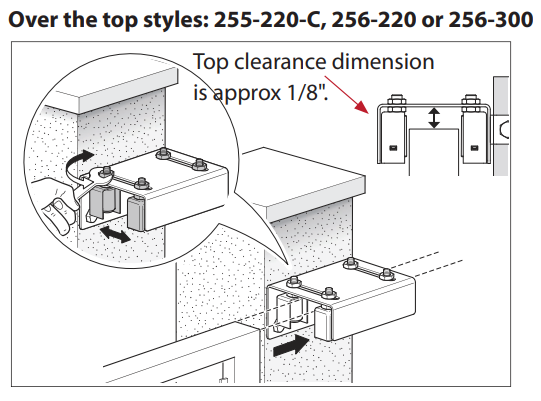
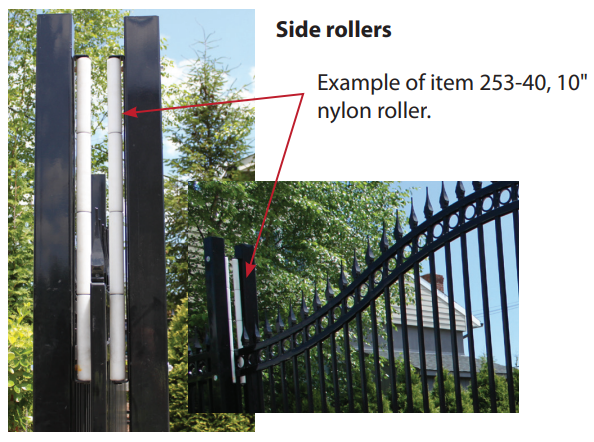
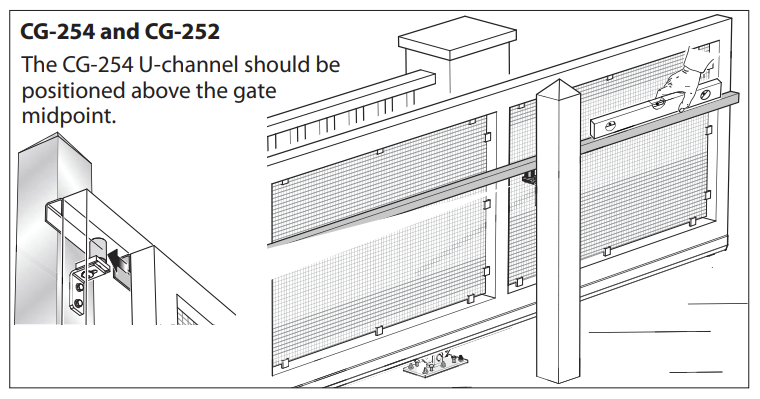
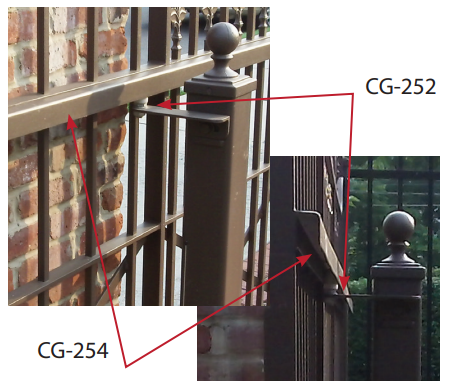
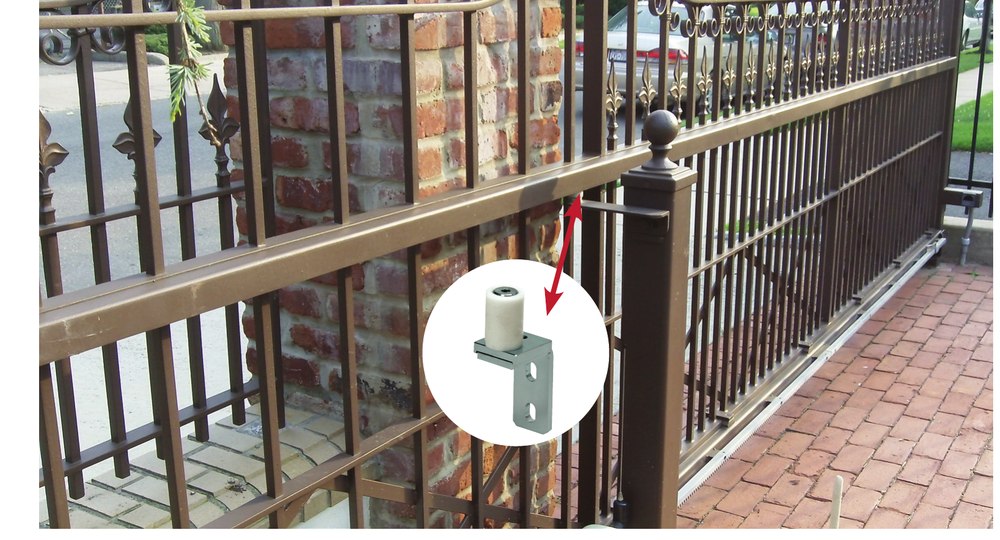
The first question to consider is whether the guides need to be “hidden” from obvious view, as is often the case in high end residential applications. And is it OK for rollers to contact the gate face where they will leave a mark on the gate over time?
The best aesthetic solution is to use a U-channel rail with guide rollers placed inside the channel. All the contact is inside the channel, so the gate surface will not be marked, and the rollers can be placed in less conspicuous positions behind posts to minimize visibility.
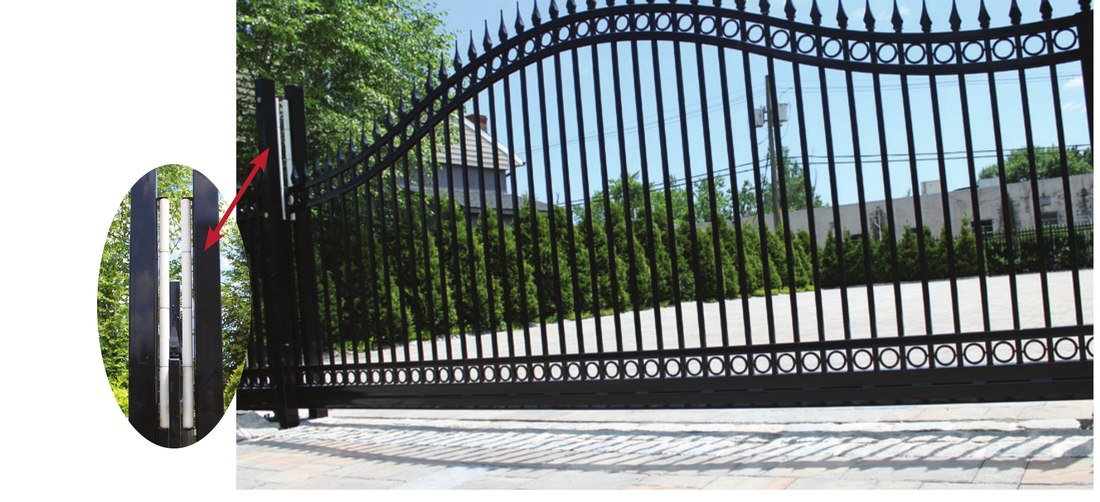
Using side rollers on arched gates often gives guideposts that extend well above the end height of the gate, which is very functional, but less appealing visually.
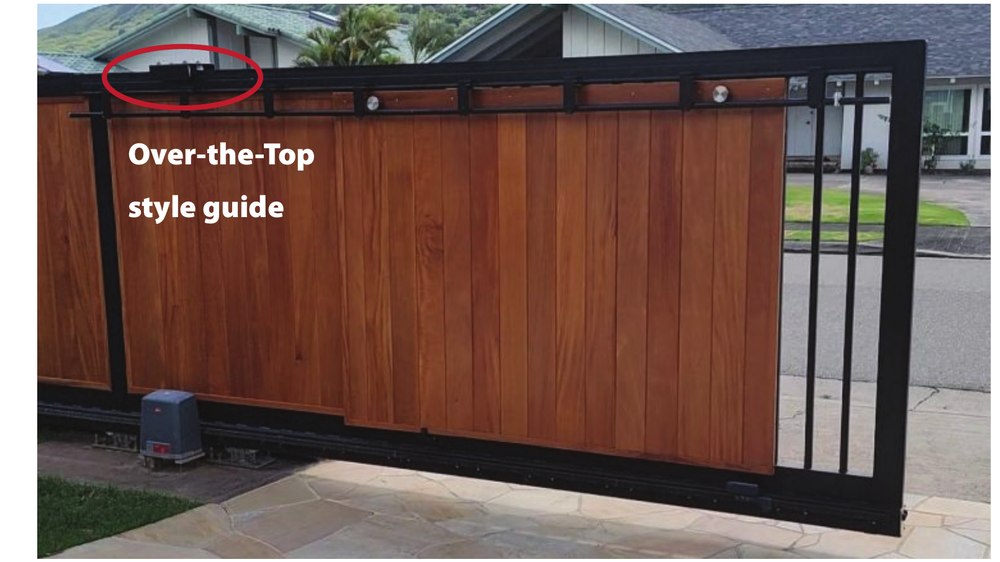
Over the top guides are seen, but when painted to match the gate, they blend into the gate and are not usually obvious or bothersome.
Functional Considerations
Over-the-Top Guides — Most Economical
The most economical option is the over-the-top guide style. It gives two rollers on each side of the top horizontal rail of the gate frame and is mounted on a single post. It requires a smooth surface on both sides of the gate frame. This is the most common style, and comes in several sizes to match the size and weight of your gate. Over-the-top guide assemblies are a low-cost solution and simple to install.
- Require smooth surface on both sides of the gate.
- Flat top gates.
- Wood privacy gates.
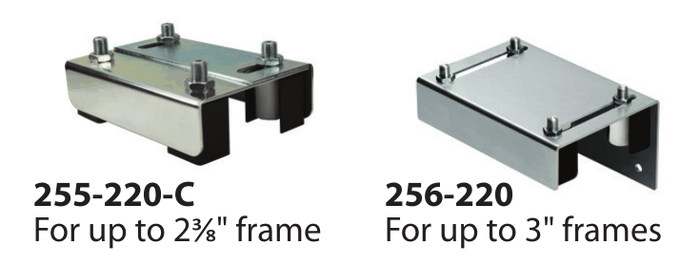
Side Rollers — Most Common
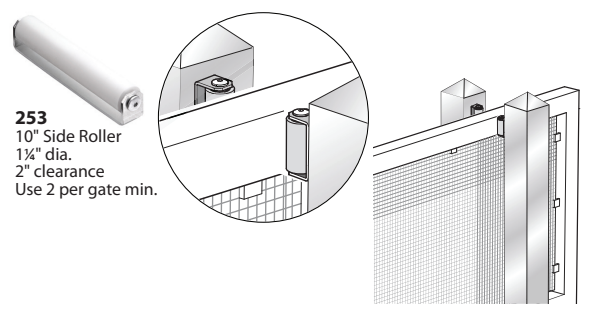
The most common solution is the use of side rollers. One roller is installed on each side of the gate and the gate rolls between them. Side rollers require a smooth surface for the rollers to contact on both sides of the gate frame — if you have surface mounted pickets, you can add a sturdy flat bar across the pickets to give a smooth surface to roll against. Side rollers are a low-cost solution, and we recommend nylon rollers over rubber rollers for all guides because they are more durable and mar the surface less.
- Guide post is required on both sides of the gate.
- Requires smooth surface on both sides.
- Arched top gates (match the arch height).
- Picket top gates.
- Security gates with razor or barbed wire.
- Wood privacy gates.
- Face mounted picket gates.
Monorail Guide With Roller — Most Elegant
The most elegant solution is the U-channel rail with rollers that fit up inside the channel. They protect the painted finish of the gate and can be added to almost any gate easily. They are a higher-cost solution because the channel runs the length of the gate. Roller assemblies are available with one, two, or four guide rollers for safety and redundancy.
- Arched top gates.
- Picket top gates.
- Chain link gates.
- Wood picket gates.
- Face mounted picket gates.
- Security gates with razor or barbed wire.
- Aesthetic/design to hide guide assembly.
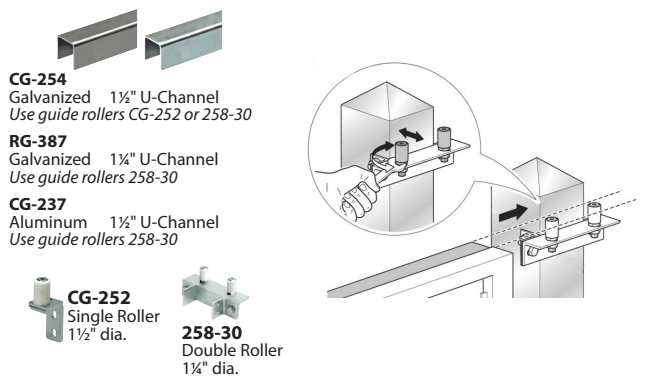
U-channel rail should not be used for heavy gates over 2,500 lbs. of cantilevered weight (3,500 lbs. total). For gates heavier than 3,500 lbs., you need rollers that have a rated capacity to resist the loads expected in these applications.
The CGS-499 side roller has a capacity of 1,100 lbs. For higher capacities, you can use bottom track hardware turned sideways to provide a guide system that can meet higher lateral load applications.
Why Would You Need More Than One Top Guide?
Two top guides make the gate more stable, both laterally and vertically. When the wind blows against a gate with only one top guide contact point, the gate twists and bends under the load. This twisting effect is more damaging to the track and carriages than simple bending, and can cause the track to crack and the hardware to fail prematurely.
To use two top guides on a gate for added lateral stability, you need to build the gate with a rectangular back frame. This extends the length of the top rail to the end of the gate, so the rear top guide stays in contact with the gate frame through the full cycle.
Every gate needs at least one. Full privacy drive gates, long gates, and heavy gates always need a second top guide. The factors used to determine when the top guide needs two contact points are:
- Gate style.
- Expected wind load.
- Gate length & weight.
The gate style factor is directly related to wind loads. Privacy gates and any gate with infill covering 70% or more of the opening should always have two separate top guides installed — this includes chain link gates installed with privacy slats. The guide assemblies should be located as far apart as the carriages (or as wide as possible).
Typical picket style or open fabric chain link gates only need a second top guide if they are:
- In constant high wind conditions.
- The second top guide makes the gate more stable as it cycles under wind load.
- Have openings 26 ft or longer.
- Longer gates have more surface area, and thus more wind load to resist.
- Are heavier than 1,800 lbs. “over the opening.”
- Heavier gates need more rollers for safety. More rollers in contact with the gate gives redundancy against roller failure accidents.
Our top guide recommendations based on gate weight are listed in the table below.
| Gate Weight Over the Opening | Over the Top Style | U-Channel Style | Side Rollers |
|---|---|---|---|
| < 600 lbs | 255-220-C | 1x CG-252 | 2x 253-40 |
| < 1200 lbs | 256-220 | 1x 258-30 | 2x 253-40 |
| < 1800 lbs | 256-300 | 2x 258-30 | 4x 253-40 OR 4x CGS-499 |
| 1800–2500 lbs | 2x 256-300 | 2x 258-30 | 4x CGS-499 |
| Over 2500 lbs | — | Carriage/Track | 4x CGS-499 |