
DuraGates — Cantilever Gates, Evolved
Accommodates
4,400 lbs at 65 ft opening
20,000 lbs at 30 ft opening
Cantilever Gate Trussing
Diagonal and lateral trussing is what keeps a cantilever gate’s frame from sagging under its own weight. Here’s why it matters, how a truss actually works, and DuraGates’ best-practice bracing methods.
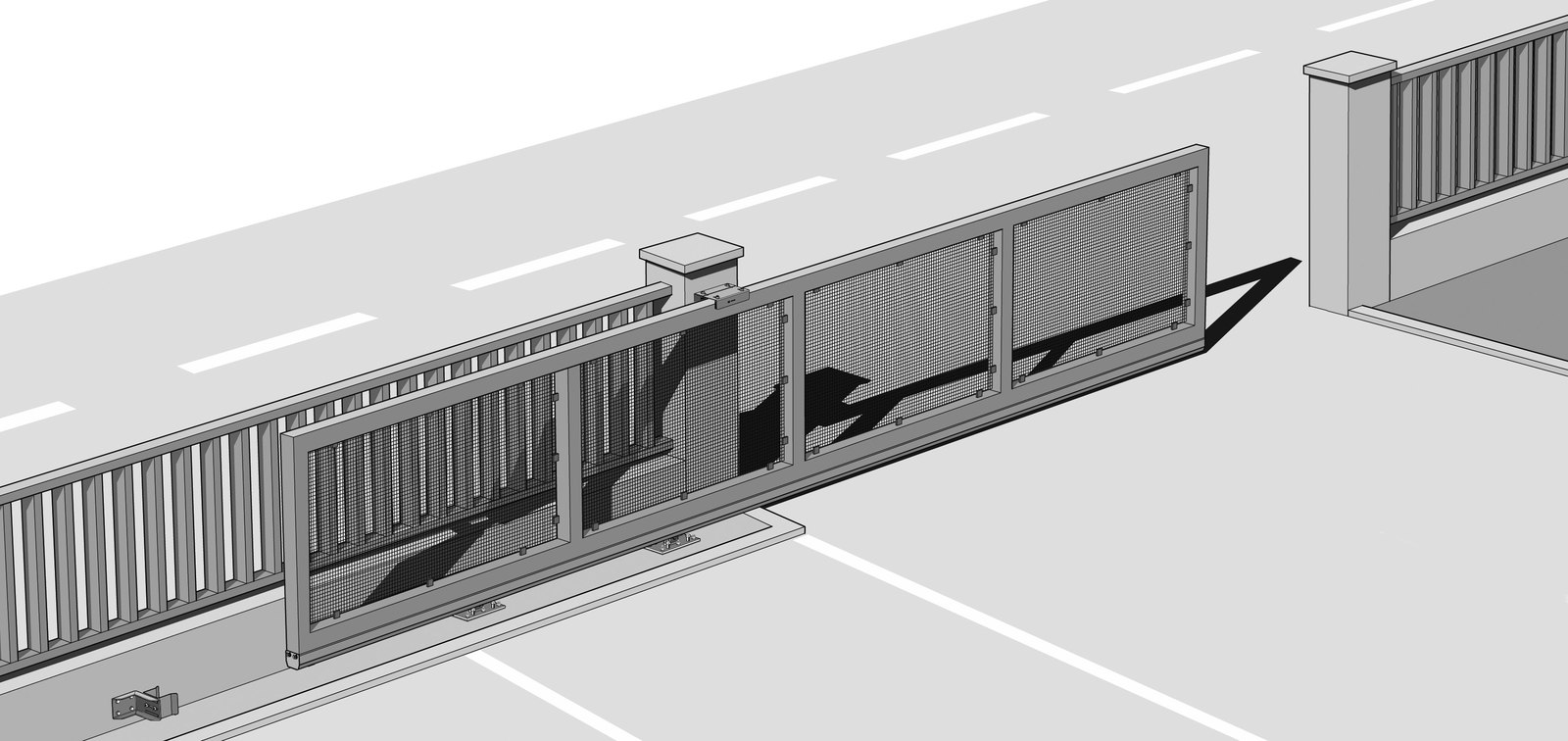
Cantilever gates are only mounted to the ground on one side and “stick out into space” on the side of the opening. The full weight of the gate is constantly being pulled down by gravity.
The rectangular gate frames are not strong enough by themselves to counter this gravitational force, leading them to slowly bend towards the ground.
Adding vertical support at certain intervals and diagonal trussing to the frame increases its ability to resist gate sag.
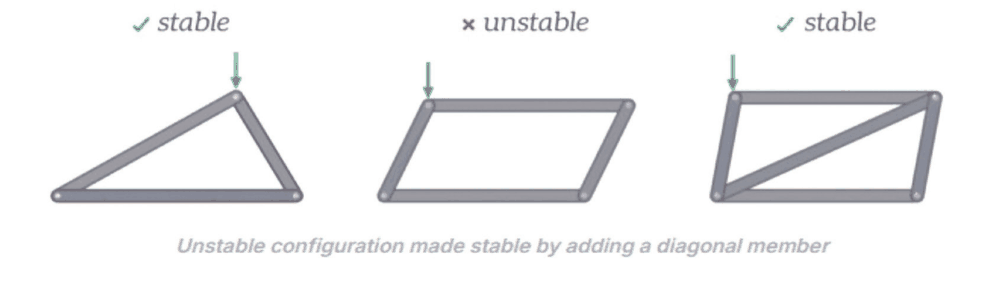
How Does a Truss Work?
A truss uses diagonal supports to distribute weight and prevent sagging.
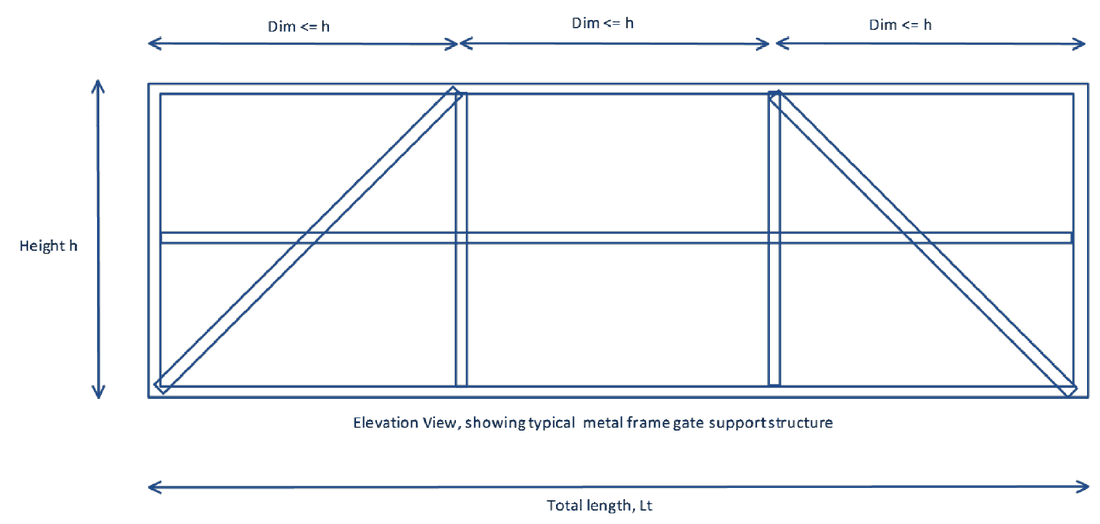
The diagonal members connect, forming a series of interconnected triangles that resist forces pushing or pulling the gate out of shape.
ALL cantilever gates must be made and trussed in a way that allows them to be self-supporting. The DuraGates track is designed and built to support the weight and balance of the gate but will not support gates that are not trussed to prevent sagging or curling, or are not in and of themselves self-supporting.
Lateral Support Is Added to a Gate in One of Three Ways
- A truss system protruding 12 inches and running the length of the gate.
- A rectangular tube (like a 2×6) attached flat to the gate top.
- A double track cantilever system with a track on both sides of the gate.
- Horizontal/lateral trusses should be used for picket style gates with openings longer than 26 ft or gates with a total length over 40 ft.
- Space out horizontal support members at intervals roughly equal to the height of the gate.
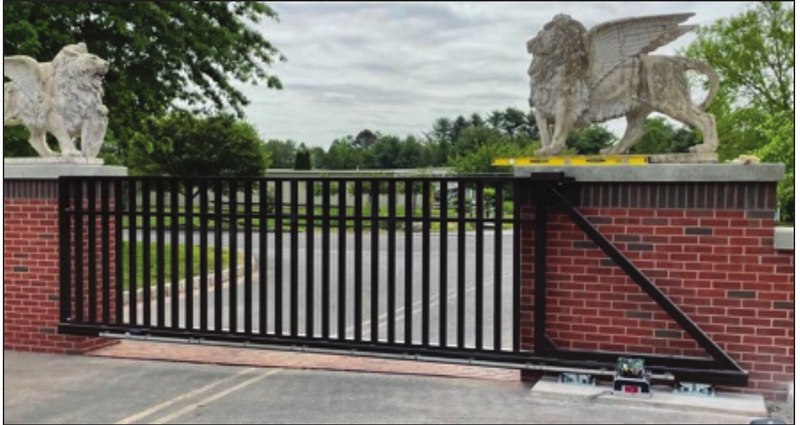
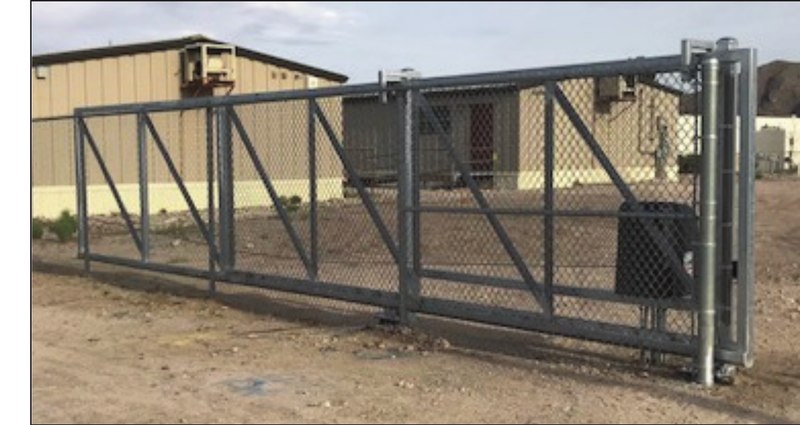
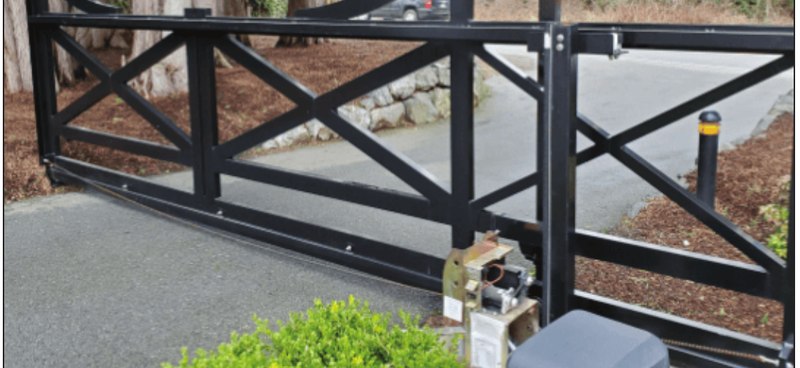
- Add diagonal bracing from corner to corner in gate section(s) to add vertical strength to the gate.
Diagonal Bracing: Typical, Better, Best
Three levels of diagonal bracing, from a simple tail-section diagonal up to full “X” bracing for large, heavy gates.
Alternative & Additional Support
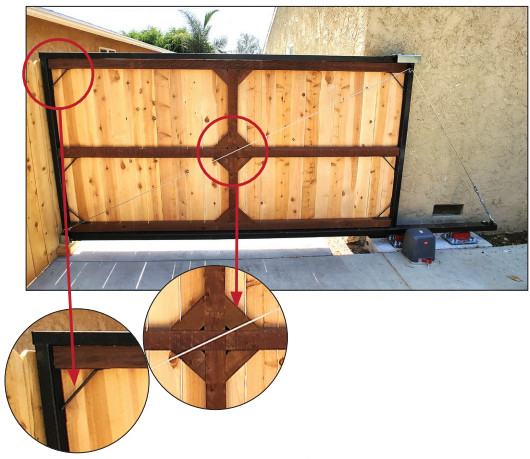
Corner Gussets
Another alternative to full diagonal supports is to put triangular gussets welded in the corners next to the vertical uprights.
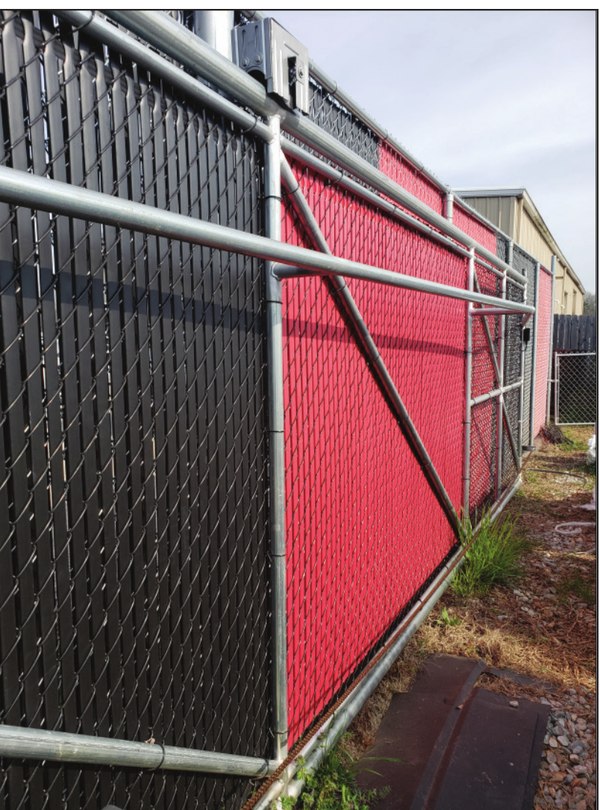
Lateral “Strong Arm” Support
Long gates also need lateral trussing to resist wind and the tendency to “lean over” to one side. Often referred to as a “strong arm” support, this is a 1 ft wide “panel” attached perpendicular to the gate, running the full length of the gate. This is especially important for privacy style gates, or any gate with significant infill to catch the wind.